Mon-Sat 9am-7pm

Mon-Sat 9am-7pm

online support
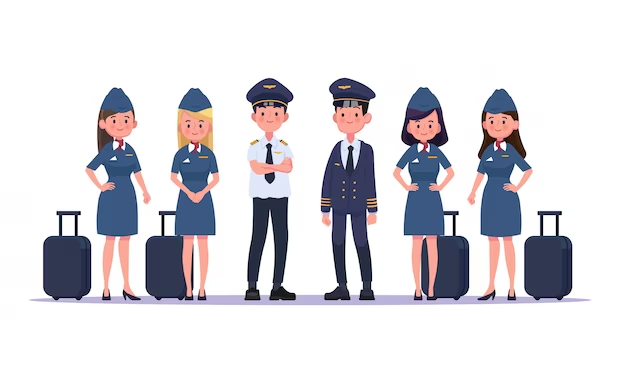
Cabin crew consisting of flight attendants carry out the instructions given by pilots or co-pilots outside the cockpit. They are also in charge of the safety and comfort of passengers on a flight, and they inform the passengers when necessary. Male flight attendants are called hosts while female ones are referred to as hostesses. Cabin crew is selected in accordance with the certain rules of aviation organizations and they are also subjected to the rules set by the General Directorate of Civil Aviation.
A degree, HND/foundation degree or postgraduate qualification is not required for entry into work as a cabin crew member. Instead, most airlines expect you to have a good secondary education, with some requiring grade 4 (C) or above in English and maths.
Although not asked for by employers, a degree, HND or foundation degree in one of the following subjects can show the airline that you have an interest in the area:
Being able to speak other languages is particularly useful and this could put you at an advantage against other candidates.
Vocational qualifications (NVQs and BTECs) are available at different levels in various cabin crew topics. They are awarded by bodies such as:
Again, these are useful for showing your commitment and interest to the area. One and two-day taster courses, which give an indication of what cabin crew work is like, and other introductory courses are also available. For details, see course providers such as Cabin Crew Wings.
Completion of these courses and qualifications demonstrates your enthusiasm for the career, but won't guarantee you a job. They may give you an edge over other candidates, but most airlines do not require them before considering you for a vacancy.
The majority of airlines do have a set of criteria, however, which candidates must meet. This includes some or all of the following:
Promotion for air cabin crew is based on experience and performance. From the role of cabin crew member, it's possible to progress to the position of purser or chief purser - which is the title given to the chief flight attendant.
Pursers have the same responsibilities as the general cabin crew but are also given the management responsibilities of a certain cabin, such as first class or business class. As purser, you'll ensure that all crew within your cabin deliver the highest level of customer service while encouraging the sale of duty-free items. Most airlines require staff to have between two to five years' experience to become a purser.
From the role of purser, you can progress to senior cabin crew. This position is known at some airlines as cabin supervisor or cabin service director. The role is very similar to that of the purser except you'll have responsibility for all cabin crew on board, not just in one particular cabin. All cabin crew and the purser/chief purser will report to you. You'll usually be involved with training and supervising new recruits and will have to ensure all relevant paperwork is completed at the end of the flight.
Some air cabin crew may also wish to become very very important person (VVIP) cabin crew (also known as corporate/executive cabin attendants). This type of work is carried out with very important private clients, usually on private aircraft. The clients are typically prestigious and may include government officials or royal families. The highest level of service is expected and employers require at the least two years' experience of working in premium (business or first) class. Many VVIP positions are based in wealth areas of the Middle East.
Another option is to move into ground-based operations, such as cabin crew training or recruitment, passenger services or crew controller. Or, at larger airlines, you can move into other areas, including marketing, sales, HR and safety training.
PROS:
CONS:
Flight attendants experience frequent travel as part of their job duties. Depending on their schedule, they may be able to take time to explore destination locations before their next flight begins or during layovers. Flight attendants also often enjoy pleasant views when they fly over landmarks and approach destination cities. The best part of it all is that they don’t have to pay for their tickets, as they’re getting to and from their destinations while on the job.
Flight attendants and other airline employees often receive discounted rates for personal travel. These benefits might also extend to their family and dependents. Flight benefits can help you and your family save money on travel for reasons such as vacation or visiting family. You may wish to research these benefits when exploring flight attendant roles and specific airlines to decide which ones offer you the most value for your work.
Because of the variable nature of flight departures and arrivals, flight attendants might work any hour of the day, any day of the week. Many airlines allow their employees to trade flights between themselves depending on factors such as seniority and the logistics of a particular swap, which can help accommodate individuals' personal schedules and preferences. Some flight attendants might also enjoy the benefit of paid time off, or PTO, provided by their employer.
Similar to many other service-oriented roles, flight attendants meet a variety of people at work, both in the air and on the ground. This can be enjoyable for people who like to make personal connections throughout the day. Meeting new people every day can also help you develop your interpersonal communication skills, which are considered highly transferable, meaning they can help you succeed in a variety of career fields if you decide to move on from working as a flight attendant.
For a flight attendant, every day will probably bring different experiences than the last. The variability of flights, locations and passengers means a regular routine may be less common, which can be pleasant for those who enjoy variety in their day. Encountering unexpected situations in your work as a flight attendant might also help you keep your professional skills sharp while keeping your work routine interesting.
Flight attendants can feel secure in their positions as demand for world travel is almost always high. People often choose air travel because it’s a fast way to reach a destination for a business event, to go on vacation or to attend to a personal obligation. The convenience of flying contributes to the continued success of the industry, which enables the long-term employment of airline crew members.
For those who prefer to work in comfortable temperatures, a career as a flight attendant may be the right fit. Flight attendants spend most of their time on climate-controlled aircraft and airports, so they can avoid exposure to extreme cold or heat. The exception is if they leave an airport to visit the area, which is typically voluntary.
While the responsibilities of a typical flight attendant don’t require strenuous physical labor beyond stowing items, they’re still on their feet a majority of the time. They spend much of their time boarding planes, walking the aisles to check on passengers and moving through airports to get to their next flight. This level of activity can help flight attendants stay fit and healthy.
If you’re looking to polish your communication skills, working as a flight attendant can give you plenty of opportunities to socialize. This is also a suitable career path for people who enjoy spending time with others at work. Flight attendants communicate with people of all backgrounds as part of their job, which they may find fulfilling.
Flight attendants often get reimbursements for all of their travel-related costs while on the job, including food. Preparing meals when you spend a lot of time traveling for work may not be possible, and purchasing each meal at airports can be expensive. Meal vouchers help flight attendants avoid these challenges while staying nourished during their shifts.
Many airlines offer their flight crews, including attendants, various benefits for their employment. Common flight attendant benefits include medical, dental, vision and life insurance. Some airlines may also offer flight attendants travel-related perks like free or discounted flights.
:Flight attendants might work on an on-call or reserve basis. This means that during certain hours, they must be available to work a flight within a specified time. A flight attendant might, for example, receive two hours' notice that they must report to the airline for work if another employee calls out sick or is unable to work. To make the most of on-call scheduling, be sure to get adequate rest when possible to ensure you're ready to go whenever you're called during your reserve hours.
The time spent away from home as a flight attendant might feel challenging at times. To handle the feeling of missing home, try bringing a memento or photos to help cheer you up. You might also use technological tools such as video calls to stay connected to friends and loved ones at home while you are away.
Flight attendants may be required to work weekends and holidays, especially when they're relatively new. Try to support your personal relationships by staying connected when you are together and making flexible plans for important gatherings and celebrations. If you work weekends as a flight attendant, consider trying to get adequate rest on your days off. Make the most of this time by engaging in activities you would otherwise do on weekend days.
Depending on their route and schedule, flight attendants may experience frequent time zone changes. The effects of jet lag can vary from person to person and often include fatigue and other physical effects, such as headache and difficulty concentrating. Research strategies for handling time changes by flying round-trip, for example, and sleeping when you can. Ask experienced flight attendants for their advice regarding time zone changes and jet lag as well. You might even consider speaking with a healthcare provider about healthy ways to mitigate the effects of jet lag when working as a flight attendant.
Flight attendants are responsible for ensuring that customers act appropriately on board. While many passengers behave according to the airline’s rules, flight attendants may have to get involved to resolve conflicts when they don’t. Many times, they can solve the issue quickly and prevent the situation from worsening.
Once you start working as a flight attendant, you may find it challenging to find promotion or growth options. Flight attendants often have the same role for many years, although they may receive regular pay raises. When you’ve proven your abilities in the position and want to move upwards in the employment hierarchy, you may also find a job in another position in the industry.
There aren’t any remote work options for flight attendants, so you may have less flexibility in terms of your schedule. Taking a sick day or handling family emergencies or other obstacles can prevent you from getting to work, which may affect your pay. Airlines often provide flight attendants with paid time off or sick days, though, which you can request if an urgent situation arises.
As a flight attendant, there’s a chance you may experience travel delays due to rescheduled or canceled flights. This can impact how long it takes you to get to your destination. Airlines understand that some flight delays are inevitable, so a change in your schedule because of a flight issue is unlikely to lead to disciplinary action.
Call us at +91 9205084085, Monday - Friday, 9 am - 7 pm